Choosing an electric dirt bike for kids starts with the rider, not the maximum speed. A bike should fit your child today, put the controls within comfortable reach, and suit a place where supervised riding is permitted. The first goal is a calm, repeatable start and stop—not completing a trail or reaching the highest setting.
The Freego M1-Neo gives parents a specific platform to evaluate: a mini electric motorcycle with a thumb throttle, five speed levels, and a published suggested age of eight and older. Its appeal is the opportunity to build familiarity gradually, with an adult managing the setting, location, and practice session.
Here is how to assess that fit and plan the first rides.
Quick answer: Choose an electric dirt bike for kids by checking the manufacturer’s age guidance, actual seated fit, control reach, and the child’s ability to follow instructions. For the Freego M1-Neo, compare its 25.6-inch seat height and approximately 50 lb weight with your child’s abilities. Begin with the lowest speed setting, suitable protective equipment, active adult supervision, and a permitted area separated from traffic.
What Kind of Electric Dirt Bike for Kids Are You Buying?
Search results can put pedal bicycles, miniature electric motorcycles, and much faster off-road machines beside one another. Their appearance does not tell you how they operate or where they belong.
The Freego M1-Neo is a throttle-only mini electric motorcycle. The rider uses a thumb throttle; pedaling is not required to start the motor. Freego lists instant throttle start, so learning where the thumb rests is part of learning the controls.
Treat it as a supervised recreational riding purchase. Decide where it will be used before ordering, and verify the rules applying to that vehicle and rider. A small frame, quiet motor, or reduced speed setting does not by itself establish permission to use a sidewalk, bicycle path, or public road.
For families with suitable space and supervision, the useful question is how well the bike supports controlled practice. That is a better starting point than comparing the largest advertised wattage.
M1-Neo Specifications That Matter to Parents
These published figures help you assess the current M1-Neo configuration. Use the current product page and supplied manual to confirm the version you receive.
| Feature | Freego M1-Neo | What parents should evaluate |
|---|---|---|
| Suggested age | 8+ | Readiness, judgment, and ability to follow instructions |
| Recommended rider height | 4′6″–5′11″ | Actual seated fit and control reach |
| Seat height | 25.6 inches | Stopping support in riding footwear |
| Net weight | Approximately 50 lb | Handling while stationary and during parking |
| Motor | 350W rated / 500W peak | Smooth throttle use rather than peak power alone |
| Speed levels | 5 / 8 / 10 / 12 / 15.5 mph | Adult selection and gradual progression |
| Throttle | Thumb throttle; instant start | Release control and accidental activation prevention |
| Battery | 36V 7.8Ah, approximately 280Wh | Charging arrangements and session planning |
| Tires | 16 × 3.0 inches | Appropriate surface and manufacturer-specified pressure |
| Brakes | Cable-operated disc brakes | Lever reach, adjustment, and stopping practice |
| Suspension | Front suspension fork | Comfort on suitable surfaces; no substitute for technique |
| Maximum load | 220 lb | Manufacturer’s load limit, not a rider-readiness test |
| Published range | 10–20 miles | Variable estimate, not a target for a beginner |
The M1-Neo combines a compact format with adjustable speed levels. Those features make it worth evaluating for a suitable young rider, but they do not replace the fit check below.

Freego M1-Neo: check the rider’s dimensions and control reach before choosing a speed setting.
Check Fit Before Choosing a Speed Setting
Age eight is a starting point
Two children of the same age may differ in height, coordination, attention, and confidence. The suggested age does not mean every eight-year-old fits or is ready. The recommended height range starts at 4′6″; check that alongside the age guidance rather than choosing whichever figure is easier to meet.
The Motorcycle Safety Foundation’s parent guidance emphasizes evaluating readiness before introducing off-highway motorcycling. A child should be willing to learn, able to follow directions, and comfortable stopping when asked. Excitement about receiving a bike is different from readiness to operate it.
Check the complete riding position
With the power off and an adult supporting the bike, assess the seated position in the footwear and equipment your child will actually wear. Check whether they can reach the bars without stretching, turn comfortably, operate the brake levers, and support the bike when stopping.
A 25.6-inch seat measurement is useful, but seat width, footwear, and body proportions also affect ground reach. If the child struggles to maintain a stable stopping position, do not assume practice will solve a poor fit.
Remember the bike’s weight
The M1-Neo weighs approximately 50 lb. Consider how that weight feels during mounting, dismounting, and a slow parking maneuver—not just while the motor is helping.
An adult should manage transport and assist with handling as needed. Do not use the 220 lb maximum load as evidence that a smaller child can control the bike. Load capacity describes a limit; it does not measure balance, reach, or judgment.
How to Use the M1-Neo’s Five Speed Settings
Speed adjustment is one of the most useful features to understand when choosing an electric dirt bike for kids. The M1-Neo lists five levels: 5, 8, 10, 12, and 15.5 mph.
Use the supplied instructions to select the setting before riding. Have an adult confirm the selected level each session. Do not assume there is a parental lock, remote stop, or password protection unless the manual for your exact bike confirms it.
| Listed setting | Parent’s priority |
|---|---|
| 5 mph | Lowest available setting for initial familiarization in a suitable clear area |
| 8 mph | Consider only after consistent control and stopping at the lower setting |
| 10 mph | Reassess skills, available space, and conditions before any increase |
| 12 mph | Continue to require deliberate control and adequate stopping room |
| 15.5 mph | Published highest setting; not a first-ride goal or a required milestone |
These are listed settings, not promises of an exact speed under every condition. Terrain, rider weight, charge level, and other factors affect operation. A selected level should not be treated as a guarantee of downhill speed control.
There is no need to advance through all five levels. Keep the setting appropriate to the rider and space, even after several successful sessions. Confidence should follow demonstrated control, not pressure to keep up with another child.
Choose the Riding Area Before the First Ride
A good practice area makes the session simpler. Look for a level, dry, predictable surface with clear visibility and generous room to stop. Obtain permission and confirm that powered recreational riding is allowed.
Walk the entire area first. Check for loose stones, holes, wet patches, blind corners, parked vehicles, pets, and people who could enter unexpectedly. Keep the riding area separated from roads, driveways in use, pedestrians, pools, ponds, drop-offs, and other hazards.
A backyard or private field is not automatically suitable. Uneven ground, tight boundaries, slopes, or limited runoff space may make it unsuitable for a beginner. Grass can hide obstacles and change grip; a field should not be assumed easier than a clear, permitted practice surface.
Discuss boundaries before switching the bike on. Identify where the rider starts, where they stop, and what happens if someone enters the area. If you cannot provide a suitable location and attentive supervision, resolve those arrangements before purchasing.

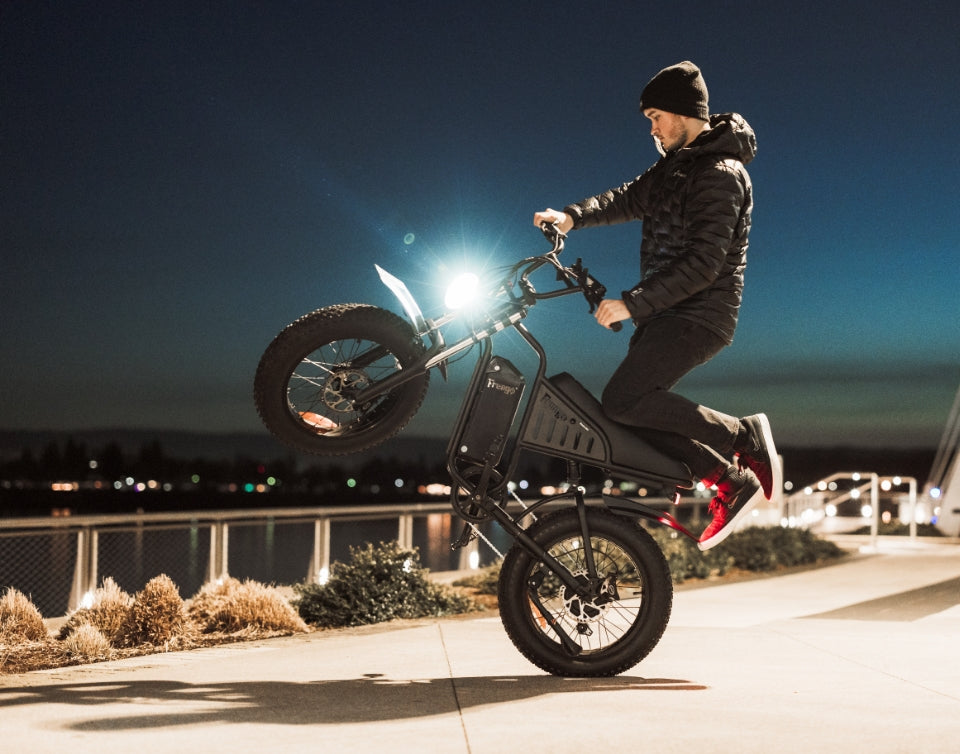
Freego M1-series lifestyle illustration; the older model shown differs from the throttle-only M1-Neo covered in this guide.
Protective Equipment and Adult Supervision
Choose protective equipment for motorized off-road riding and the child’s actual size. The MSF’s parent guidance covers a properly fitted motorcycle helmet, eye protection, gloves, protective clothing, and appropriate boots. Follow the applicable helmet standard and the requirements of the riding location or training provider.
Equipment should allow the child to see, turn their head, and operate the controls comfortably. Secure straps and clothing so they cannot catch in moving parts. A helmet or pair of gloves that is too large is not a useful way to leave growing room.
Supervision means watching the rider throughout the session, giving clear instructions, and being ready to end practice. It does not mean watching occasionally from indoors. Keep the first sessions focused on one learner, with other children and spectators outside the practice area.
Consider qualified youth off-road instruction. A product guide can help you prepare and choose a bike, but it cannot assess a child’s technique in person.
A Practical Plan for the First Rides
Use the owner’s manual and qualified instruction as the operating guide. The sequence below is a planning framework for parents, not a substitute for hands-on training.
1. Complete the adult setup checks
Before the child mounts, complete assembly and the manufacturer’s pre-ride checks. Verify wheel security, steering, tire condition and pressure, brake operation, and the throttle’s return. Confirm the selected speed setting and check that controls are unobstructed.
Do not begin if a brake needs adjustment, the throttle sticks, or anything feels loose. Freego’s home maintenance guide provides broader maintenance context; use the M1-Neo instructions for model-specific work.
2. Learn the controls with power off
Explain the thumb throttle, brakes, power controls, and the agreed stop instruction. Ask the child to identify and demonstrate each control without guessing. Make sure they understand that the bike can move under throttle without pedaling.
Practice mounting, the supported seated position, and dismounting before powered movement. Turn the power off before an adult repositions the bike or assists with handling near the controls.
3. Begin with brief, controlled movement
With the lowest setting selected and the area clear, follow the manual and instructor’s directions for initial starts and stops. Keep the task simple and leave generous space ahead.
The parent’s observation should focus on whether the child can release the throttle deliberately, apply the brakes as instructed, and stop at the agreed location. If the response is confused or inconsistent, stop and revisit the controls rather than adding distance.
4. Add one task at a time
After repeatable straight-line control, introduce only the next appropriate exercise recommended by the instructor. Do not increase speed, introduce a new surface, and add tighter turns together.
End while the child remains attentive. Fatigue, frustration, repeated missed instructions, or deteriorating control are reasons to finish. A short session with a few calm successes is useful progress.

Freego M1-series lifestyle illustration, showing an older model. Terrain access and rider readiness must be assessed separately.
Tires, Brakes, and Suspension: What the Features Mean
The M1-Neo’s 16 × 3.0-inch tires and front suspension are relevant to its compact recreational format. They can help manage suitable surface irregularities, but they do not make every patch of gravel, mud, or wet grass appropriate for learning.
Use the pressure guidance for the bike and tires. Avoid a generic “kids’ dirt bike pressure” copied from another model. Inspect for damage and confirm that the wheels turn normally before each session.
Its cable-operated disc brakes deserve the same attention as the speed setting. Check lever operation and braking performance according to the manual, and arrange adjustment when needed. A child must be able to operate the controls comfortably; a brake specification alone cannot confirm that.
For a first electric dirt bike for kids, the useful feature combination is one the rider can understand and the parent can maintain. More power or more elaborate suspension does not resolve a control-reach problem.
Plan Charging, Storage, and Transport
The published 10–20-mile range is an estimate that varies with use. Plan early practice around attention and skill, not battery endurance. You do not need to finish the available charge to make a session worthwhile.
An adult should handle charging with the supplied or specifically approved charger. CPSC advises being present while charging and never charging while asleep. Follow the manufacturer’s instructions for the charging location, temperature, connections, and storage.
Provide secure storage that prevents unsupervised use. Put the power controls, keys if supplied, and charger under adult management. After a fall or impact, inspect the bike before further use; damaged battery components require manufacturer guidance.
For transport, allow for the bike’s approximately 50 lb weight. Check the vehicle, carrier or loading equipment, tie-down method, and all relevant ratings. Do not assume that a rack intended for a lightweight pedal bicycle is compatible.

Freego M1-Neo lifestyle photograph. Choose a first-ride area well away from water and other hazards.
A Parent’s Buying Checklist
Before choosing an electric dirt bike for kids, confirm these six points:
- Rider: The child meets the manufacturer’s guidance and demonstrates readiness to follow instructions.
- Fit: Seated support, handlebar reach, and brake operation work in actual riding equipment.
- Setting: An adult understands the five speed levels and how to confirm the selected one.
- Location: There is permission, appropriate space, and separation from traffic and bystanders.
- Support: Protective equipment, active supervision, and suitable instruction are arranged.
- Ownership: Charging, storage, maintenance, and transport are manageable for the family.
If those pieces fit, review the Freego M1-Neo specifications and compare its dimensions with your child before ordering. If fit or control access remains uncertain, ask Freego to confirm the exact configuration rather than buying a larger or faster model for future growth.
Frequently Asked Questions
What age is the Freego M1-Neo designed for?
Freego lists a suggested age of eight and older and a recommended rider height of 4′6″–5′11″. Both are starting points. Actual fit, control reach, readiness, and applicable riding rules still matter.
How fast does the M1-Neo go?
Its published top speed is 15.5 mph, with five listed settings: 5, 8, 10, 12, and 15.5 mph. Start with the lowest setting and use the manual to confirm operation. The highest setting is not a beginner’s target.
Does the M1-Neo require pedaling?
No. It uses a thumb throttle with instant throttle start. Explain throttle release and brake operation before powered riding, and keep the power off during handling practice and repositioning.
Can a child ride it on a sidewalk or public trail?
Do not assume permission. Access depends on the vehicle, rider, and location’s rules. Confirm permission before riding, and choose an appropriate supervised area separated from traffic and pedestrians.
Is the M1-Neo suitable as a first powered bike?
It is worth evaluating for a rider who meets its guidance, fits the controls, and has suitable supervision and a permitted practice area. Its speed settings support gradual familiarization, but they do not replace readiness assessment or instruction.
Should parents choose a bigger bike for growing room?
Choose around present control and fit. A larger bike can place controls out of reach or add weight the child cannot manage. Reassess suitability as the rider grows instead of sacrificing the first riding experience for future size.