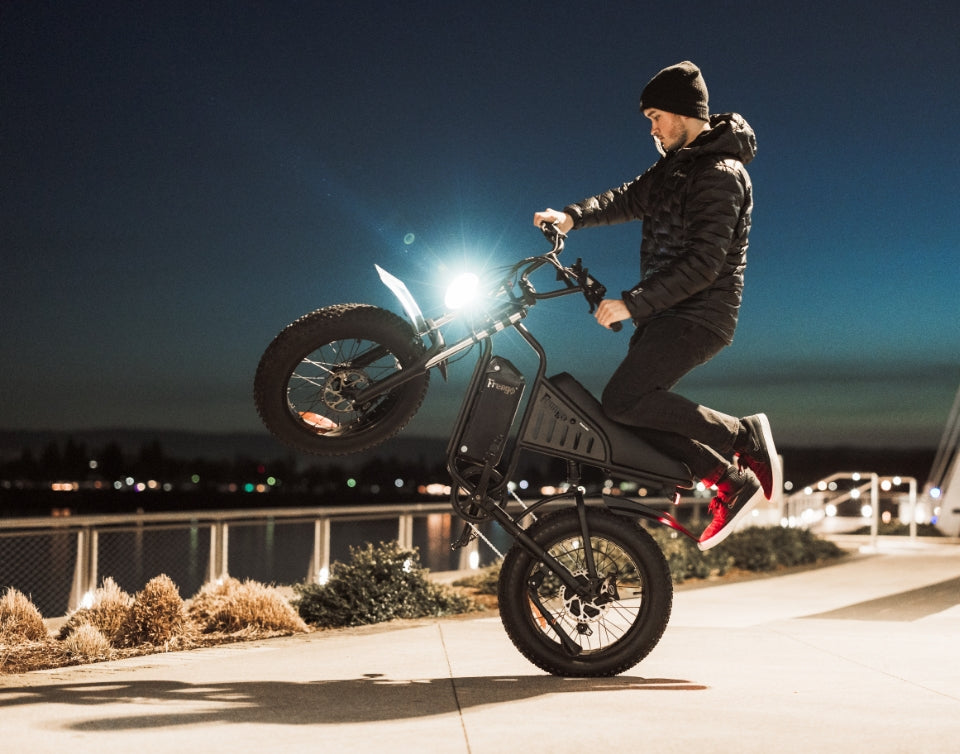


E-Bike Battery Selection: Why Freego's Single Battery Outperforms Dual Setup
In the rapidly expanding electric bike market, consumers are frequently met with a barrage of marketing buzzwords, with "dual batteries" often touted as the gold standard for achieving long range performance. However, for eCommerce merchants and industry professionals, it is well understood that surface level specifications rarely tell the complete story. When analyzing the core pillars of efficiency, safety, and long term ownership value, a single high capacity eBike Battery often significantly outshines dual battery configurations, particularly when the total energy output is comparable.
Freego, a premium brand headquartered in California, stands firm on this engineering principle. Models like the Freego X3, X2 Pro, and the urban performance Shotgun Prime F2 Pro demonstrate that a single, well engineered eBike Battery is far superior to two mediocre, smaller packs. This guide breaks down the technical logic and real world trade offs to help you make an informed purchase.
Quantity vs. Quality: The Core Misconception
The trend toward dual battery setups thrives on a simple but misleading narrative: that more physical packs equals more range. This ignores the fundamental scientific principle of electric power systems: it is the total energy, measured in Watt-hours (Wh), that determines your real world range, not the number of battery packs on the frame.
Maximizing Energy Density
Freego flagship X3 is a perfect testament to this truth. It features a single 72V 50Ah eBike Battery that delivers an incredible 3600Wh of total energy. This single unit eclipses the combined output of most dual 1000-1500Wh setups found elsewhere on the market. Similarly, the Freego X2 Pro utilizes a 60V 30Ah (1800Wh) eBike Battery that provides a reliable range of 37–56 miles, outperforming many dual-battery competitors.
Many brands overemphasize dual packs to mask the use of low quality individual cells with poor energy density. Freego instead focuses on maximizing cell consistency within a single high grade pack, aligning with the brand value "Ride Freego, Feel the FREEDOM". For Shopify merchants, highlighting this distinction is vital for providing customers with an unbiased, data-driven appraisal of what they are actually buying.
Technical Pitfalls of Dual eBike Battery Systems
While two batteries might look impressive, they introduce several practical challenges that can harm the user experience and increase safety risks. Freego’s single battery design eliminates these issues entirely.
1. The Burden of the Battery Balancer
Dual-battery systems require a specialized hardware component known as a battery balancer. This component is mandatory to force synchronized charging and discharging between the two packs. Without it, one pack will inevitably deplete faster, leading to overcharging or premature cell degradation. Even with a balancer, daily cycles create voltage discrepancies that can reduce total usable energy by 15–25% over time. A Freego eBike Battery avoids this by using ultra-tight cell consistency and a sophisticated BMS (Battery Management System) to maintain stable voltage naturally.
2. Excessive Failure Points and Complex Wiring
A dual eBike Battery setup relies on a complex network of extra wiring and connectors that are highly vulnerable to vibration, moisture, and temperature fluctuations. Adding a second battery is not as simple as plugging it in; experts at EM3ev warn that these configurations require complex discharge balancers to avoid "fireworks" and manage the electrical load safely. By choosing a Freego model like the X3 or F2 Pro, you utilize a singular, high-capacity architecture that eliminates these dangerous failure points and "middleman" components entirely.
3. Compromised Structural Safety and Certification
To fit two separate packs, manufacturers often modify original frame designs. This may involve cutting additional compartments or weakening structural load points, which disrupts the bike's optimal weight distribution. A poorly balanced bike increases handling risks during high speed travel or sudden maneuvers, scenarios where the X2 Pro and X3 shine because of their central mounting and low center of gravity.
Why the Single eBike Battery Wins for Every Rider
Whether you are a daily commuter or an off-road adventurer, the benefits of the Freego single eBike Battery approach are clear.

Superior Efficiency and Performance
Freego’s batteries minimize energy loss during discharge. This means more stored energy translates directly into riding distance, even under high load conditions where a rider and gear exceed 200kg. For example, the X3 offers a maximum real world range of 100 miles, far more than dual-battery models that waste power on balancer operation and electrical resistance. Even the urban focused Shotgun Prime F2 Pro delivers a reliable 31–50 miles from its single 48V 22.5Ah unit.
Lower Maintenance and Ownership Costs
With no battery balancer or extra wiring to fail, a Freego eBike Battery system requires minimal maintenance. This saves customers money on replacement parts and labor, which is essential for online buyers who may not have a local repair shop nearby. Freego reinforces this with a 24-month limited warranty on all battery systems.
While some dual-battery systems require complex disassembly or multiple chargers, the Freego single high-capacity eBike Battery is designed for effortless removal. As shown in the video below, a simple turn of the key and a secure lift allow you to take your power source inside for climate-controlled charging, extending its lifespan by avoiding extreme temperatures
Watch: How to securely remove and maintain your Freego eBike Battery in seconds.
Honest, Real-World Range
As Freego’s performance proves, range depends on total Wh, not the number of packs. While factors like heavy loads or high-speed riding will naturally affect any eBike Battery, a high-capacity single pack maintains much better performance under high-stress conditions than a dual setup with the same total energy.
Freego eBike Battery Specifications
| Model | Battery Type | Total Energy (Wh) | Max Range |
| XMAN Series X3 | 72V 50Ah Single Pack | 3600Wh | 100 miles |
| XMAN X2 Pro | 60V 30Ah Single Pack | 1800Wh | 37-56 miles |
| Shotgun Prime F2 Pro | 48V 22.5Ah Single Pack | 1080Wh | 31-50 miles |
Conclusion: The Bottom Line for Your Purchase
Dual battery setups are rarely a genuine technical upgrade; they are almost always a marketing gimmick used to compensate for poor engineering. By choosing a Freego bike with a single high-capacity eBike Battery, you are investing in a better user experience, higher reliability, and superior structural safety. When you understand that real range is about total Watt-hours, you can make a smarter, more confident purchase.
The best eBike Battery isn’t the one with the most packs, it is the one with the right total energy and a design that prioritizes the rider’s safety and experience. That is the engineering philosophy behind every Freego bike.