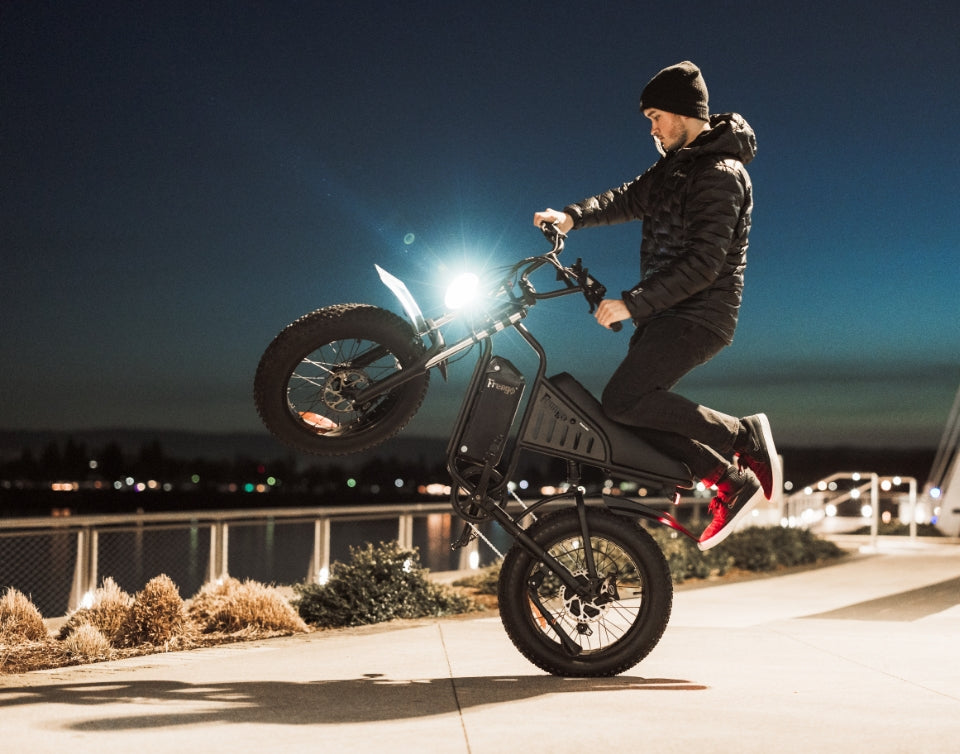


Can You Ride an eBike in the Rain? A Complete Guide to Wet Weather Riding & Freego eBike Care
A sudden rain shower does not always mean the end of your eBike journey.
For many riders, electric bikes have become more than recreational products. They are practical transportation tools used for commuting, running errands, exploring neighborhoods, and enjoying outdoor adventures. But when weather conditions change, many riders ask the same question:
Can you ride an eBike in the rain?
The answer is generally yes. Most modern electric bikes are designed for outdoor environments and can handle normal situations such as light rain, wet roads, and occasional water spray.
However, riding confidently in wet weather depends on more than simply whether an eBike can get wet.
Rain changes the way a bike performs. Wet roads reduce tire traction, increase braking distance, and require riders to pay closer attention to visibility and maintenance. The design of the eBike itself also plays an important role. Features such as tire size, braking systems, suspension, battery protection, and frame construction all influence how a bike handles changing conditions.
At Freego, we design electric bikes around real riding scenarios. From daily commuters who need reliable transportation to adventure riders exploring more challenging terrain, different Freego models are developed with specific riding purposes in mind.
By understanding how rain affects your eBike and how to properly care for it afterward, you can enjoy a safer and more reliable riding experience throughout the year.
Can You Ride an eBike in the Rain?

For most riders, riding an eBike in light or moderate rain is possible when proper precautions are followed.
Electric bikes are designed to be used outdoors, which means manufacturers consider that riders may encounter changing weather conditions during normal use. A commute may begin under clear skies and end with unexpected rain. A weekend trail ride may include wet gravel or muddy sections after a storm.
However, riders should understand one important difference:
An eBike being water-resistant does not mean it is waterproof.
Most quality electric bikes are designed to protect important electrical components from everyday exposure, but they are not built to withstand extreme water conditions such as flooding or full submersion.
Before riding in the rain, consider three major factors:
| Factor | Why It Matters During Rainy Conditions |
|---|---|
| Tire traction | Wet surfaces provide less grip, especially on painted lines, metal surfaces, leaves, and smooth pavement |
| Braking performance | Water can increase stopping distance, so riders need to brake earlier and more smoothly |
| Visibility | Rain and low-light conditions can make it harder for riders and drivers to see each other |
The U.S. Consumer Product Safety Commission (CPSC) emphasizes the importance of responsible riding practices, including wearing appropriate protective equipment and maintaining key safety components such as brakes, tires, and lights.
Rain itself does not automatically make an eBike unsafe. The key is understanding your riding environment, your bike's capabilities, and how to adjust your riding style.
Are eBikes Waterproof? Understanding Water Resistance
One of the most common questions from new eBike owners is:
"Will rain damage my electric bike?"
The answer depends on how much water exposure occurs and how the bike is designed. Most electric bikes are considered water-resistant rather than completely waterproof.
Water-resistant means that the bike is designed to handle normal outdoor situations, such as:
- Light rainfall during a commute
- Wet roads after a storm
- Water spray from tires or the road surface
However, riders should avoid treating an eBike like equipment designed for underwater use.
An electric bike contains several sensitive electrical systems, including:
- Battery connections
- Motor components
- Controllers
- Display systems
- Charging ports
These components are protected through careful design, but prolonged exposure to moisture can still affect long-term reliability if the bike is not properly maintained.
For Freego riders, the goal is not to avoid every drop of rain. Instead, it is about understanding your bike's limits, riding responsibly, and following proper care practices after wet rides.
What Does an IP Rating Mean for an eBike?
When researching whether you can ride an eBike in the rain, you may come across IP ratings.
An Ingress Protection (IP) rating describes how resistant a specific electrical component is against dust and water.
A simplified explanation:
| IP Rating | Water Protection Level | What It Means for Riders |
|---|---|---|
| IPX4 | Protection against water splashes from different directions | Suitable for normal exposure such as light rain and road spray |
| IPX5 | Protection against low-pressure water streams | Provides stronger protection against more direct water exposure |
| IPX6 | Protection against powerful water jets | Designed for higher levels of water resistance |
However, there is an important point many riders overlook:
An IP rating usually applies to specific components, not automatically the entire eBike.
For example, a battery enclosure may have a certain level of protection, but other parts of the bike may have different levels of exposure.
This is why even a well-designed eBike should not be:
- Submerged in water
- Ridden through deep flooding
- Cleaned with high-pressure water
At Freego, designing reliable electric bikes means considering how riders actually use them. Daily transportation and outdoor exploration often involve changing environments, so thoughtful component protection and proper maintenance work together to support long-term performance.
How Rain Affects Your eBike’s Key Components?
Rain does not usually create immediate problems during a normal ride. The bigger concern is repeated exposure to moisture without proper care.
Different parts of an eBike respond differently to wet conditions.
| eBike Component | How Rain Can Affect It | What Riders Should Pay Attention To |
|---|---|---|
| Battery & charging system | Moisture around electrical connections may affect long-term reliability | Keep charging ports dry and avoid charging when moisture is present |
| Motor system | Deep water exposure may create risks for electrical components | Avoid flooded roads or riding through unknown-depth water |
| Tires | Wet surfaces reduce available traction | Ride slower and avoid sudden turns |
| Brakes | Wet conditions can increase stopping distance temporarily | Brake earlier and check performance after wet rides |
| Frame & metal components | Long-term moisture exposure may contribute to wear or corrosion | Dry the bike after riding in heavy rain |
How Freego eBikes Are Designed for Different Riding Conditions?
 Rain changes the riding experience.Wet pavement, loose gravel, muddy trails, and uneven surfaces all require different levels of stability, control, and confidence. This means choosing the right eBike is not only about motor power or maximum speed—it is about finding a bike that matches your riding environment.
At Freego, we design different categories of electric bikes for different riding purposes. Whether you need a reliable commuter for daily transportation, a versatile bike for mixed terrain, or a high-performance machine for off-road adventures, each lineup is built around a specific riding experience.
|
Freego Category |
Best For |
Models |
|
Adventure E-Bikes |
Mixed terrain riding, exploration, and riders who want versatility |
X1 Standard, X2, X2 Pro, X3, X3 Pro |
|
Class 2 E-Bikes |
Daily commuting, city riding, and practical transportation |
X1 SE, F2 Pro, F0 |
|
Electric Dirt Bikes |
Off-road riding and high-performance experiences |
Nova 4, Nova 5, Nova 5 Mini, X0 |
|
E-Scooters |
Outdoor recreation and alternative mobility |
X60 Plus |
Adventure E-Bikes: Built for Riders Who Go Beyond City Streets
For riders who want more freedom than a traditional commuter bike can provide, Freego Adventure E-Bikes are designed to handle a wider range of environments, including city streets, gravel roads, trails, and other mixed surfaces.
The Adventure E-Bike lineup includes the X1 Standard, X2, X2 Pro, X3, and X3 Pro. While each model offers a different level of performance, they share a focus on stability, control, and all-terrain capability.
These characteristics become especially valuable when riding conditions change after rainfall. Wet pavement can reduce traction, while gravel and dirt surfaces may become softer and less predictable. Features such as wider tires, suspension systems, and hydraulic braking help riders maintain greater confidence when navigating different terrains.
The Freego X1 Standard provides a balanced introduction to the Adventure E-Bike category, featuring a 3000W motor system, 60V 25Ah battery, and 20×4 fat tires. For riders who want more capability, the Freego X2 and Freego X2 Pro step up to a 6000W motor platform and 60V 30Ah battery system, providing stronger assistance for longer rides, hills, and more challenging surfaces.
At the higher-performance end, the Freego X3 and Freego X3 Pro are designed for experienced riders who demand greater output and off-road capability. Equipped with 8000W motor systems and 72V battery platforms, these models provide the power needed for more demanding terrain and adventure-focused riding.
However, power alone does not determine riding confidence in wet conditions. Tire contact, braking control, and suspension performance are equally important. The combination of these design elements helps Adventure E-Bike riders feel more stable when roads become uneven or unpredictable.
Class 2 E-Bikes: Designed for Everyday Transportation
For many riders, an eBike is not primarily an adventure vehicle—it is a practical transportation solution for commuting, errands, and daily mobility.
Freego’s Class 2 E-Bikes category includes the X1 SE, F2 Pro, and F0, focusing on comfort, accessibility, and dependable everyday performance.
Compared with high-performance off-road models, these bikes are designed around the needs of riders who spend more time on city streets, bike lanes, and neighborhood roads.
The Freego X1 SE offers a powerful yet practical riding experience with a 6000W motor system and 60V 30Ah battery platform, giving riders additional capability while maintaining everyday usability.
The Freego F2 Pro focuses on comfort and stability, featuring a 750W rated motor, 48V 22.5Ah battery, 20×4 fat tires, hydraulic disc brakes, and a full suspension system. These components help create a smoother and more controlled ride, especially when roads are uneven or affected by changing weather conditions.
For riders who prefer a more approachable fat tire eBike, the Freego F0 provides a practical option that combines stability with everyday convenience.
When commuting in rainy conditions, these design choices matter. Wider tires can help riders feel more planted on wet pavement, while reliable braking systems provide better control when stopping distances increase.
For daily riders, the goal is not maximum speed—it is a comfortable, predictable, and dependable riding experience.
Electric Dirt Bikes: Built for Off-Road Performance
Some riders choose electric mobility products because they want an experience closer to a motorcycle-style off-road ride.
Freego’s Electric Dirt Bikes category includes the Nova 4, Nova 5, Nova 5 Mini, and X0. Unlike traditional pedal-assist eBikes, these models are designed around higher torque, stronger acceleration, and dedicated off-road performance.
The Nova Series uses mid-drive motor systems, delivering stronger torque and a more motorcycle-inspired riding experience. The Nova 4 features a 6000W mid-drive motor platform, while the Nova 5 increases performance with an 8000W mid-drive system. The Nova 5 Mini offers a more compact option with a 2500W mid-drive platform, providing a smaller but capable off-road experience.
The Freego X0 takes a different approach. Although it uses a hub motor system, it is categorized as a Mini Electric Dirt Bike because it does not include pedals and is designed specifically for off-road riding. With a 3600W hub motor and 60V 23Ah battery system, it provides a compact performance-focused option for riders seeking a smaller electric dirt bike format.
Because these models are designed for off-road environments, riders should pay extra attention to terrain conditions after rainfall. Mud, loose soil, and wet trails can significantly affect traction, meaning responsible speed control and proper riding technique become especially important.
E-Scooters: Another Way to Explore Outdoor Spaces
Beyond electric bikes, Freego also offers the Freego X60 Plus, a multifunctional off-road balance scooter designed for recreational riding and outdoor exploration.
With dual 750W motors, a total peak output of 3000W, and a 57.6V 15.6Ah battery system, the X60 Plus is designed for environments such as campsites, grass areas, gravel paths, and outdoor recreational spaces.
Its off-road-oriented design provides riders with another way to explore outdoor environments where traditional transportation options may not be ideal.
As with all electric mobility products, proper riding habits and maintenance remain important when conditions become wet or unpredictable.
How to Protect Your Freego eBike After Riding in the Rain?
A few simple maintenance habits after a wet ride can help protect your eBike and maintain long-term performance.
After riding in rainy conditions, begin by drying the bike with a soft cloth. Moisture can remain on areas such as the frame, battery housing, display, and exposed metal components, so taking a few minutes to remove surface water can help reduce unnecessary wear.
Before charging your Freego eBike, always check that the charging port and surrounding area are completely dry. Charging a battery system while moisture is present may create unnecessary safety risks.
A quick inspection after riding can also help identify problems early.
|
Area to Check |
Recommended Action |
|
Battery and charging port |
Make sure the area is dry before charging |
|
Tires |
Remove mud or debris and check tire condition |
|
Brakes |
Confirm braking feels normal after riding in wet conditions |
|
Frame and metal components |
Wipe away moisture to reduce long-term corrosion risk |
|
Storage environment |
Keep the bike in a dry and protected location whenever possible |
Consistent maintenance is especially important for riders who frequently ride outdoors. A well-maintained eBike is more likely to deliver reliable performance in different weather conditions.
Rain Riding Safety Tips for eBike Riders
Even the most capable eBike performs best when paired with responsible riding habits.
Slow Down on Wet Surfaces
Rain reduces traction, especially on smooth surfaces such as painted road markings, metal covers, and wet leaves. Reducing speed gives tires more time to maintain contact with the riding surface and allows riders to react more effectively.
Brake Earlier and More Smoothly
Wet conditions can increase stopping distance. Instead of waiting until the last moment, apply brakes earlier and avoid sudden braking whenever possible. Hydraulic disc brakes and quality tires can improve control, but they cannot completely eliminate the effects of slippery surfaces.
Improve Visibility
Rain often reduces visibility for both riders and drivers. Using lights, wearing visible clothing, and avoiding riding during severe weather conditions can help improve safety.
The National Highway Traffic Safety Administration (NHTSA) emphasizes the importance of visibility and responsible road behavior as important factors in transportation safety.
FAQ
Can I ride my Freego eBike in the rain?
Yes. Freego eBikes are designed for normal outdoor riding conditions, including occasional exposure to light rain and wet roads. However, riders should avoid extreme water exposure such as deep flooding or submerging the bike, and should follow proper maintenance practices after wet rides.
Will rain damage my Freego battery?
Normal rain exposure does not automatically damage an eBike battery when the bike is used correctly. Riders should keep charging areas dry, avoid charging when moisture is present, and follow safe charging practices recommended by the manufacturer.
Are fat tire eBikes better for riding in the rain?
Fat tires can provide additional stability because they create a larger contact area with the ground. However, they do not remove the need for careful riding. Wet roads still require reduced speed and smoother handling.
Can I wash my Freego eBike with water?
Light cleaning may be acceptable, but riders should avoid using high-pressure water directly on electrical components. High-pressure water can force moisture into areas that are not designed for direct water exposure.
References & Trusted Resources
U.S. Consumer Product Safety Commission (CPSC), https://www.cpsc.gov/
UL Solutions, UL Solutions
National Highway Traffic Safety Administration (NHTSA), https://www.nhtsa.gov/
PeopleForBikes, PeopleForBikes | Every rider. Every ride.