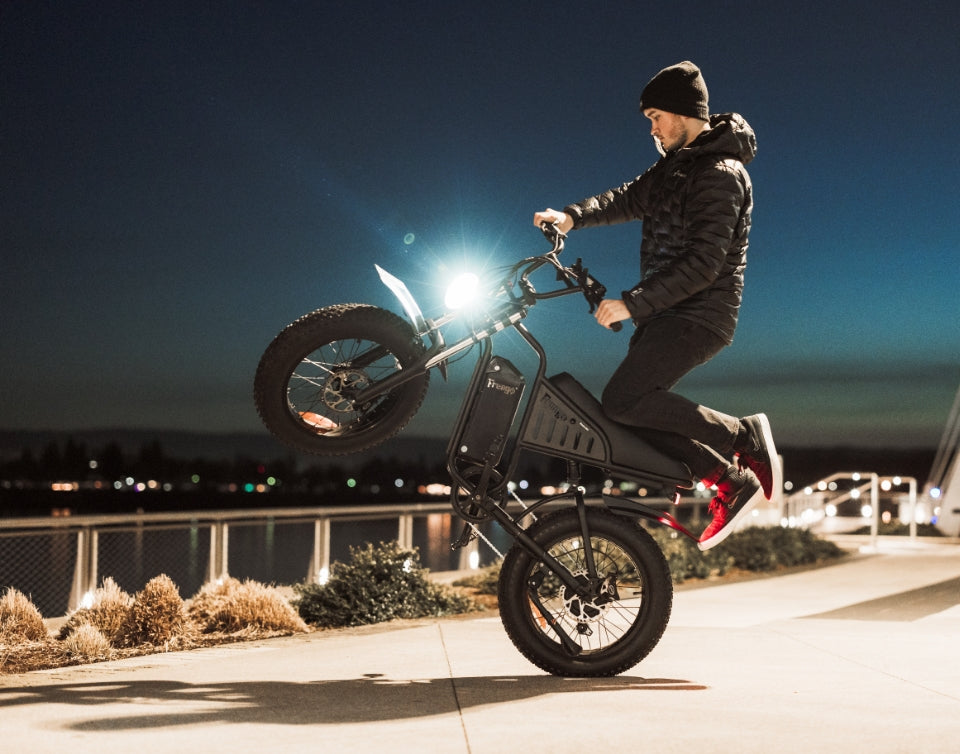
Electric Dirt Bike for Adults: How to Choose the Right Ride
Looking for an electric dirt bike for adults that delivers exciting performance without the noise and routine engine maintenance of a traditional gas-powered motorcycle? Today's electric models offer different power levels, battery capacities, suspension systems, and riding experiences. Finding the right one involves more than comparing top speeds.
Whether you're exploring dirt trails, riding on private property, or starting off-road adventures, this guide explains what matters most when choosing an electric dirt bike for adults.
Quick Answer: The best electric dirt bike for adults depends on riding experience, terrain, budget, and physical fit. Prioritize controllable motor power, suitable battery range, effective brakes, capable suspension, and a frame that fits your height. Always verify where the exact model may legally be ridden.
What Makes an Electric Dirt Bike Suitable for Adults?
An electric dirt bike for adults should accommodate the size, weight, and performance needs of a full-grown rider. Compared with smaller youth models, adult-focused bikes generally have larger frames, greater load capacities, more substantial suspension systems, and power suited to varied conditions.
- Rider fit: Seat height, handlebar reach, and comfortable foot positioning.
- Motor performance: Enough power for the terrain without overwhelming the rider.
- Battery capacity: Practical range for typical rides.
- Brakes: Predictable stopping performance for the bike's weight and speed.
- Suspension: Appropriate travel and damping for uneven surfaces.
- Construction: Wheels, frame, and components rated for the intended rider and use.
A powerful bike that is too tall or difficult to control may be less enjoyable than a moderate-power bike with the right fit.
1. Choose Motor Power Based on Your Riding Style
Motor output is often the first specification buyers compare. Electric dirt bikes range from relatively mild machines to high-output models intended for experienced riders. Higher wattage, however, does not automatically mean a better choice.
Entry-Level and Recreational Riding
If you're new to electric off-road riding, smooth acceleration and manageable throttle response are critical. A more approachable power delivery helps when practicing starts, stops, turns, and balance on appropriately gentle terrain.
Intermediate Trail Riding
Riders who encounter hills, loose surfaces, and changing trail conditions may benefit from additional torque, stronger suspension, and more substantial braking. Consider rider weight, traction, drive configuration, and how the motor delivers power rather than judging by watts alone.
High-Performance Off-Road Riding
Experienced riders may want stronger acceleration and greater power reserves. The Freego X2 Pro, for example, features a rear hub motor with 3000W nominal and 6000W peak output and an off-road mode. High power demands careful throttle control, protective equipment, and suitable permitted riding areas.
For a detailed explanation of ratings, read our E-Bike Motor Power Guide.
2. Understand Battery Capacity and Real-World Range
Battery specifications can be confusing when shopping for an electric dirt bike for adults. Voltage (V) and amp-hours (Ah) are useful, but watt-hours (Wh) give a clearer indication of stored battery energy.
Voltage × Amp-Hours = Watt-Hours. For example, a 60V 30Ah pack offers approximately 1,800Wh nominal capacity. That figure does not guarantee a specific riding distance.
Real-world range depends on speed, acceleration, rider weight, terrain, elevation, tire pressure, temperature, wind, riding mode, and throttle usage. Fast off-road riding generally consumes energy more quickly than moderate riding on smooth ground.
How Much Range Do You Really Need?
Plan around the longest ride you expect to take, including the return trip. Short sessions on private property differ from extended recreational excursions. Leave a comfortable battery reserve rather than planning around the maximum advertised estimate.

3. Look for Suspension Designed for Your Terrain
Suspension influences comfort and control over bumps, ruts, rocks, and uneven surfaces. A hardtail generally features a suspension fork without dedicated rear suspension. It can be simpler to maintain but transmits more rear-wheel impacts to the rider.
A full-suspension design uses front and rear suspension components and can improve comfort and contact with rough terrain when properly designed and adjusted. The Freego X2 Pro uses a hydraulic inverted front fork and rear shock.
Do not choose solely because a listing says “full suspension.” Look at the design, adjustment options, intended load, and quality of its components.
4. Don't Overlook Braking Performance
Acceleration draws attention, but controlled stopping matters just as much. An electric dirt bike for adults can be considerably heavier than a conventional bicycle. Vehicle mass, rider weight, speed, and terrain all increase braking demands.
Hydraulic disc brakes are common on performance-oriented models. Some use two-piston calipers; others use four-piston units. Actual stopping performance also depends on rotor diameter, pads, brake condition, tire traction, and proper setup.
- Check brake-lever feel and response.
- Inspect pads and rotors for damage or unusual wear.
- Look for leaking fluid or damaged components.
- Check tire condition and available traction.
If braking feels inconsistent, have the system inspected before riding again.
5. Get the Right Seat Height, Frame Size, and Weight
Physical fit can determine how confidently you handle an electric dirt bike for adults. Compare the manufacturer's dimensions with your height, inseam, strength, and experience.
Seat Height
A taller seat can improve ground clearance but may make stopping and balancing more demanding. You do not necessarily need both feet completely flat on the ground, yet you must be able to stabilize the bike safely when stopped.
Bike Weight
A heavier bike can demand more effort to push, turn, transport, or recover after tipping. Consider whether you can maneuver it comfortably with the motor off.
Maximum Load
Check the manufacturer's maximum rated load, including rider and equipment. Exceeding that limit can affect handling, braking, and component loads. Never assume every adult-sized vehicle fits every adult rider.
6. Check Where You Can Legally Ride
Where an electric dirt bike may be used is one of the most important purchasing questions. In the United States, laws distinguish qualifying low-speed electric bicycles from more powerful motorized vehicles.
Class 1, Class 2, and Class 3 categories generally apply to vehicles meeting particular motor and speed requirements. A powerful off-road model does not automatically qualify because it has pedals or a lower-speed setting.
- Check which roads and trails permit your exact vehicle.
- Verify any registration, licensing, and insurance requirements.
- Review local power, speed, and equipment limits.
- Follow applicable age and helmet requirements.
For more background, consult our guide to e-bike laws, limits, and Freego models.
Important: A manufacturer's city mode alone does not establish road legality. Requirements depend on the vehicle and location.
7. Consider Charging, Maintenance, and Ownership Costs
The purchase price is only part of the ownership experience. Electric drivetrains remove routine gasoline-engine tasks such as fuel changes and engine oil servicing, but electric dirt bikes still require regular inspections.
Tires, brakes, suspension, wheel hardware, electrical connections, and applicable drive components all need attention. Check parts availability and service support before deciding which bike to buy.
Battery Care
Use only a charger approved for the exact battery, follow the manufacturer's instructions, and avoid charging unattended or while sleeping. Do not charge or use a battery showing swelling, serious damage, overheating, or other abnormal behavior. Follow the manufacturer's guidance on charging and storage temperatures.

8. Is a Freego Electric Dirt Bike Right for You?
Freego offers models aimed at different riding preferences, from smaller recreational machines to high-output off-road bikes. Adults interested in stronger performance may want to explore the Freego X2 Pro.
Its published specifications include a 3000W nominal / 6000W peak rear hub motor, a 60V battery platform, hydraulic front and rear suspension, four-piston hydraulic disc brakes, and city and off-road modes. Confirm the current product listing for exact load ratings, dimensions, availability, and operating specifications.
Compare those specifications against your terrain, physical fit, experience, and local riding restrictions. Explore the Freego Electric Dirt Bike Collection to review available options.
Which Freego Electric Dirt Bike Fits Your Riding Experience?
Choosing an electric dirt bike for adults is not just about the most powerful option. A rider who wants a manageable daily machine has very different priorities from someone who frequently rides demanding off-road terrain. These five Freego models illustrate the range of frame sizes, motor configurations, and riding styles available.
Published specifications are shown below for a practical first comparison. Battery options and specifications can change by version. Always confirm the current model page before ordering. The suggestions describe intended rider use, not a guarantee that any model is lawful on public streets or trails.
| Model | Motor / Drive | Battery | Net Weight | Suggested Height | Riding Modes | Best Fit / Terrain |
|---|---|---|---|---|---|---|
| X1 SE | 750W nominal | 60V 25Ah | 117 lb | 5'3"–6'1" | Throttle up to 20 mph; PAS up to 28 mph (configuration-dependent) | Adults seeking pedal-assist flexibility, daily rides, and lighter recreational terrain |
| X0 | 2000W nominal / 3600W peak; rear hub | 60V 23Ah | 99 lb | 4'7"–5'9" | City 20 mph / off-road up to 40 mph; throttle only | Shorter adults seeking a compact mini bike for permitted recreational off-road use |
| X2 Pro | 3000W nominal / 6000W peak; rear hub | 60V 30Ah or 40Ah | 123 lb | 5'4"–6'5" | City up to 28 mph / off-road up to 50 mph | Experienced riders seeking full-size 60V performance and rough-trail capability |
| X3 Pro | 4500W nominal / 8000W peak; rear hub | 72V 40Ah or 50Ah | 132 lb | 5'7"–6'3" | City up to 28 mph / off-road up to 56 mph | Experienced riders wanting higher-output off-road performance where permitted |
| Nova 5 | 4000W nominal / 8000W peak; mid-drive | 72V 40Ah | 158 lb | Verify physical fit with product dimensions | Throttle-controlled, performance-focused off-road use | Experienced riders who prioritize mid-drive response and demanding off-road terrain |
Load capacity matters too: Shopify's current product specifications list 264 lb for the X1 SE, X2 Pro, and Nova 5; 220 lb for the X0; and 330 lb for the X3 Pro. These are rated maximum loads—not promises that every rider below the limit will fit comfortably. Consider clothing, protective equipment, and any carried gear when comparing the figures.

Match the Bike to Your Experience, Not Just Its Top Speed
New Riders: Start With Control and Fit
Beginners should first ask whether they can balance the bike at a stop, reach the controls naturally, and make a smooth low-speed turn. Throttle sensitivity, seat height, available traction, and vehicle weight are all more relevant to learning than the maximum speed shown on a product page. The X1 SE can be worth exploring for riders who prefer pedal-assist options. A compact X0 may better fit a shorter adult, but its 3600W peak power and 40 mph off-road specification mean it is not automatically a beginner bike.
Practice on level, permitted ground with protective equipment. Learn braking and emergency stops before attempting slopes, loose gravel, or high-power riding. Riding modes can help manage output, but selecting a slower mode does not replace appropriate training.
Confident Recreational Riders: Compare Chassis and Terrain
Adults with basic two-wheel experience may value predictable traction, suspension quality, and a frame that remains manageable when stopped or pushed. The X2 Pro represents a step toward higher-output off-road riding with a full-size chassis. Compare its weight, battery options, and high-power modes against the routes you actually plan to ride. More range is only useful when the bike still fits your ability and storage space.
Experienced Off-Road Riders: Evaluate Power Delivery and Recovery
The X3 Pro and Nova 5 are more performance-oriented options. The headline output is only one part of the choice: assess throttle response, braking, suspension behavior, uphill starts, wheel traction, and whether you can safely recover the bike if it falls. An experienced motorcycle rider may adapt faster to a heavier machine than a novice cyclist, but electric acceleration deserves its own practice.
Adult Rider Fit: Inseam, Seat Height, Weight, and Load Capacity
Height ranges are helpful screening tools, but two adults of the same height may have very different inseams, arm reach, and strength. A useful pre-purchase check begins with the manufacturer's rider-height range and seat height, then considers handlebar reach, standing posture, and how the rider will stabilize the machine on uneven ground.
Don't confuse seat height with standover height. Seat height describes the saddle's vertical position; standover clearance relates to where the rider stands above the frame. On a motorcycle-style machine, seat width and suspension sag also influence how easily a rider can plant a foot at a stop.
Net weight becomes important in three situations often overlooked by shoppers: backing the bike out of a garage without motor assistance, maneuvering it up a ramp, and lifting it after a low-speed tip-over. A difference of 30–60 lb can be meaningful in these tasks. The X0's listed 99 lb is substantially below the Nova 5's listed 158 lb, yet neither should be assumed easy to lift alone. Ask whether the battery can be removed and whether doing so meaningfully reduces handling weight.
If you're near a listed maximum load rating, check it carefully rather than treating it as a performance target. Braking distance, suspension sag, acceleration, and tire loading can all change with total load. Never exceed the manufacturer's rating.
Rear Hub Motor vs Mid-Drive: What Adults Should Know
The X0, X2 Pro, and X3 Pro use rear hub motors, while the Nova 5 uses a mid-drive layout. A hub motor puts propulsion at the wheel; a mid-drive places motor output closer to the drivetrain. Neither arrangement is inherently best for every adult rider.
Rear hub systems can offer relatively direct power delivery with fewer transmission components in the motor's drive path. The feel still depends on controller calibration, torque, traction, and total bike weight. Mid-drive systems can provide a different weight distribution and torque response, especially on technical terrain. Their drivetrain components may also demand attention depending on the design.
A 72V rating is not a standalone safety score or a simple measure of how difficult a bike is to ride. Battery voltage, controller current, motor output, gearing, total mass, and throttle mapping work together. In practice, a higher-output 72V X3 Pro or Nova 5 will generally require more deliberate input management than a moderate 750W commuter-oriented configuration.
For a deeper breakdown, compare our 48V vs 60V vs 72V battery guide and the electric dirt bike vs fat-tire e-bike comparison.

Practical Ownership: Transportation, Storage, and Trail Access
Before choosing an electric dirt bike for adults, decide how it will get to your riding area. A machine you cannot conveniently transport may see less use regardless of its performance. Measure your garage door, hallway, and storage footprint; remember that motorcycle-style handlebars and tires can make a bike wider than expected.
For vehicle transport, do not assume an ordinary bicycle rack can carry a heavy electric dirt bike. Check the rack's per-bike weight rating, the vehicle hitch's tongue-weight limit, and any manufacturer restrictions for motorized bikes. Include the weight of the rack itself when evaluating the vehicle's total limit. A truck bed or appropriately rated trailer may be more practical for heavier models.
When loading, use a stable ramp designed for the bike's weight and follow the vehicle and rack manufacturers' securing instructions. Consider whether you need assistance to load and unload safely. Secure the machine against forward, backward, and sideways movement; protect electrical components from unnecessary impact and moisture.
At home, choose a dry, secure storage location that allows appropriate battery charging and inspections. Follow the exact battery manufacturer's storage instructions; avoid blocking exits or placing charging equipment where heat cannot dissipate safely. Ask about replacement batteries, tires, brake parts, and support before purchase.
Safety and Legality: City Mode Is Not Automatic Street Approval
Two models may look similar but fall into different legal vehicle categories. A lower-speed city mode does not independently turn a high-power electric dirt bike into a street-legal Class 2 or Class 3 e-bike. Classification depends on the exact vehicle and applicable law. Confirm where your chosen model can operate before traveling to public roads or managed trails.
On off-road routes, verify vehicle access rules, whether motorized bikes are allowed, and whether the trail requires registration or additional protective equipment. Wear an appropriate helmet and eye protection, sturdy footwear, gloves, and other riding gear suited to your speed and terrain. Avoid unfamiliar high-speed riding, especially on shared or crowded paths.
Compare Freego Models Before You Buy
Instead of selecting solely by motor wattage, choose a shortlist based on experience level, physical fit, intended terrain, vehicle weight, and how you will transport it. Start with X1 SE or X0 for fit and format comparisons, then consider the X2 Pro, X3 Pro, or Nova 5 if your skills and intended riding environment support a higher-performance choice.
Ready to narrow it down? Open two or three product pages, compare their actual dimensions and rated capacities, and check current availability. The right electric dirt bike for adults is the model you can ride, handle, transport, and maintain with confidence—not simply the one with the biggest number on the spec sheet.
Final Thoughts: How to Find the Best Electric Dirt Bike for Adults
Choosing the right electric dirt bike for adults means matching the machine to the rider. Start with where you intend to ride, what experience you have, and the level of acceleration you can comfortably manage.
Then compare range, suspension, braking, fit, long-term serviceability, and local legal requirements. The best choice isn't necessarily the fastest machine: it's one that provides the performance you need while remaining manageable and appropriate for your riding environment.
Frequently Asked Questions
What is the best electric dirt bike for adults?
It depends on experience, terrain, physical fit, and budget. Look for manageable power, reliable brakes, suitable suspension, sufficient range, and a frame that fits.
Can beginners ride an electric dirt bike for adults?
Yes, but beginners should prioritize controllable acceleration, a comfortable seat height, and practice at low speed in a safe, permitted area while wearing suitable protective equipment.
How fast can an electric dirt bike for adults go?
Top speed varies significantly by model and configuration. Always check the manufacturer's ratings and the restrictions that apply where you plan to ride.
How long does an electric dirt bike battery last?
Per-charge range depends on battery capacity, terrain, rider weight, speed, and riding style. Long-term battery lifespan depends on charging habits, temperatures, storage, and usage.
Are electric dirt bikes for adults street legal?
Not automatically. Some powerful models may be regulated as motor vehicles. Verify the requirements for the exact vehicle and jurisdiction.
Do electric dirt bikes require a lot of maintenance?
They generally need less routine powertrain servicing than gasoline motorcycles, but brakes, tires, suspension, wheels, and electrical components still need ongoing maintenance.