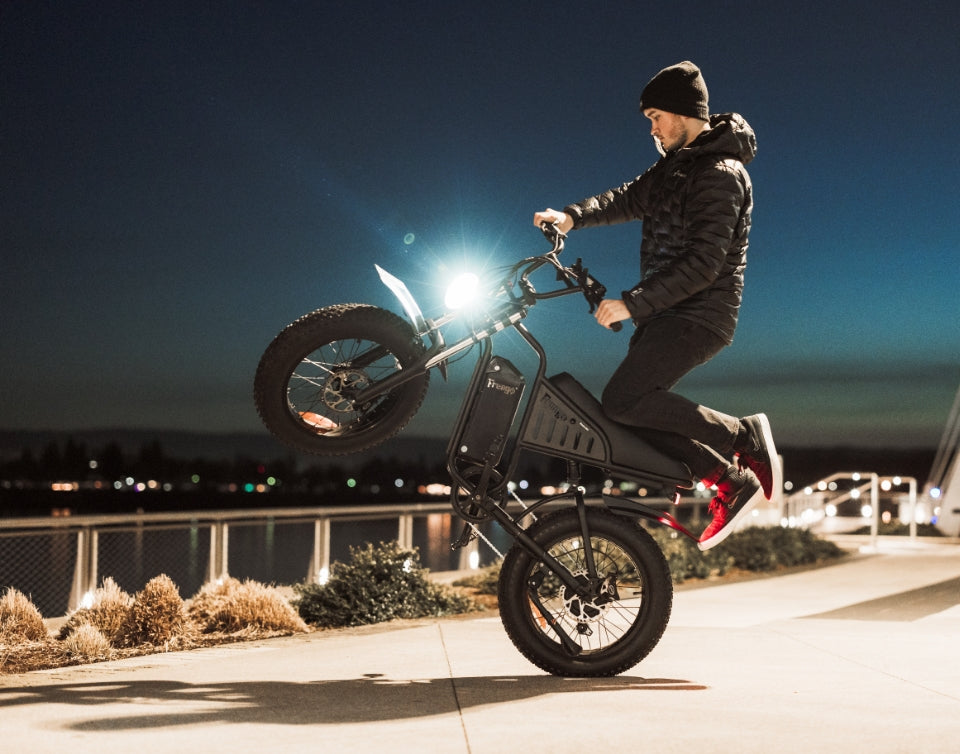
Electric bike suspension helps the wheels respond to uneven ground while reducing the movement passed through to the rider. If your usual ride includes broken pavement, gravel access roads, or permitted dirt trails, the suspension layout deserves as much attention as the motor. The right configuration can make a familiar route feel more composed and help you finish with less discomfort.
Freego offers several ways to approach that choice. Full-suspension fat-tire models serve everyday riding needs, the X2 Pro combines an inverted hydraulic fork with a KKE rear shock, and the Nova family brings front and rear suspension to dedicated off-road e-motos. These are different vehicle categories, so matching the platform to your route comes before comparing individual components.
This guide explains the practical benefits of front and rear suspension, the terms worth understanding, and how to compare Freego configurations without choosing by motor output alone. It also covers the fit and setup questions that help turn a component list into a comfortable, usable ride.
What does electric bike suspension do?
Quick answer — Electric bike suspension lets the wheels move in response to bumps, helping manage impacts and maintain more consistent tire contact on uneven surfaces. A front fork works at the front wheel; full suspension adds controlled movement at the rear. Comfort and control depend on the complete bike, rider fit, tires, speed, and correct setup—not simply on having the softest shock.
Why electric bike suspension matters beyond comfort
Think about the repeated edges on a damaged paved route. Each seam asks the wheel to change direction vertically. Without suspension movement, more of that disturbance must be managed by the tires, frame, and your body. A suitable suspension system adds another way for the bike to accommodate those changes.
The benefit is especially easy to appreciate over a series of small bumps. Instead of bracing for every surface change, the rider can concentrate on looking ahead and operating the controls. You still need relaxed arms, an appropriate posture, and a pace that leaves room to respond. Suspension supports those habits rather than replacing them.
Control is another part of the picture. When a wheel encounters irregular ground, suspension movement can help it follow the surface. That is useful when steering and braking over uneven terrain, although traction still depends on the tire, surface, load, and rider inputs. No component guarantees grip on loose gravel, wet leaves, or ice.
For buyers, the useful question is therefore specific. Do you want greater comfort over everyday pavement joints, more support for permitted rough-surface exploration, or a dedicated off-road platform? Answering that question makes the range of Freego suspension layouts easier to understand.

Front suspension and full suspension serve different needs
A suspension fork allows movement at the front wheel. It helps manage impacts that reach the handlebars and contributes to the way the front end follows uneven ground. This can suit riders whose regular routes are mostly smooth but include occasional rough sections.
Full suspension adds a rear shock and a frame arrangement that allows rear-wheel movement. The rear system helps manage disturbances coming through the back of the bike, where a seated rider may otherwise feel repeated bumps. For routes with frequent imperfections, that extra movement can be a meaningful part of everyday comfort.
Freego’s F2 Pro is a full-suspension fat-tire option worth considering for everyday utility and recreation. Its combination of front and rear suspension and wide tires addresses a different riding brief from a full-size off-road e-moto. The relevant comparison is how the complete platform fits your routine.
Full suspension does not mean every model has identical behavior or the same intended use. Frame geometry, wheel size, shock design, rider load, and available adjustments all matter. A useful comparison checks those details together instead of treating the words “full suspension” as a universal performance rating.
How the fork, spring, and damper work together
The fork guides front-wheel movement and supports the front of the vehicle. An inverted layout places the larger outer fork sections toward the top. The X2 Pro’s published specification identifies a hydraulic inverted front fork, giving buyers a concrete component layout to evaluate alongside its rear shock.
The spring supports load and resists compression. Depending on the component, that spring may use a coil or an air system. A visible coil does not tell you every adjustment available inside the unit, and a hydraulic description does not mean the spring is air-adjustable. Check the actual component instructions before buying setup tools.
Damping controls the speed of suspension movement. In general terms, compression describes movement into the travel, while rebound describes the return after compression. Those concepts explain why a system can feel supported rather than simply bouncing after an impact.
A manufacturer’s tuning guide can help explain the vocabulary. For example, RockShox explains rebound and compression behavior. Its component settings are not instructions for a Freego fork or KKE shock; use the manual for the hardware fitted to your bike.
Compare Freego suspension layouts by riding purpose
Use the following comparison to create a shortlist. It focuses on suspension layout and vehicle purpose, rather than promising that one platform will be the best choice for every rider. Confirm the current U.S. configuration before ordering, especially when a particular shock or adjustment is important to you.
| Freego model | Published suspension layout | Useful buying question | Riding focus |
|---|---|---|---|
| F2 Pro | Front and rear full suspension | Would front and rear cushioning improve your regular paved route and everyday comfort? | Fat-tire utility and recreational riding where permitted |
| X2 Pro | Hydraulic inverted front fork and KKE rear shock | Does this adventure platform fit your body, handling experience, and permitted terrain? | Adventure riding with motorcycle-style wheels and tires |
| Nova 5 | Front and rear hydraulic suspension | Are you looking for a dedicated mid-drive off-road e-moto rather than a pedal-equipped everyday bike? | Off-road recreation on authorized terrain |
The F2 Pro provides a straightforward starting point for riders who want suspension benefits in a fat-tire utility format. The X2 Pro offers another route for buyers seeking its larger adventure-bike package. The Nova 5 belongs in the conversation when the intended purchase is specifically an off-road e-moto.
These models should not be grouped together as interchangeable commuting bikes. Pedals, vehicle classification, and local access rules must be checked separately. A suspension system or a riding-mode name does not establish permission to ride on a public road, bicycle path, or particular trail.

What the KKE rear shock adds to the X2 Pro discussion
The X2 Pro’s KKE rear shock gives buyers a specific rear-suspension component to investigate instead of relying on a broad comfort claim. Together with the inverted hydraulic fork, it forms the model’s front-and-rear approach to managing rough surfaces.
For a rider comparing configurations, the next questions are practical. Which adjustments are fitted to the current unit? What spring setup is appropriate for the rider and equipment? Which service instructions apply? Freego support can help identify the component version when the product page does not provide every detail.
Do not assume that every KKE-branded unit has the same travel, internal design, or adjustment range. Likewise, the presence of a recognizable component brand does not establish a measured advantage over every competing bike. Focus on the fitted hardware and how the complete vehicle suits your riding needs.
Read travel figures carefully before comparing bikes
Travel describes available movement, but the measurement must be identified correctly. Front-fork travel, rear-shock stroke, shock mounting length, and rear-wheel travel are different dimensions. A larger number is useful only when you know which dimension the specification describes.
At the rear, frame linkage and leverage affect how shock movement relates to wheel movement. Do not copy a shock-stroke figure into a table labeled rear-wheel travel. If the listing combines several dimensions, ask Freego to clarify the measurement before using it to compare platforms.
More travel can be relevant to a particular off-road application, but it is not automatically the best answer for an everyday route. Your ability to fit the vehicle, manage its weight, and operate it comfortably remains part of the decision. Choose the intended vehicle first, then evaluate its suspension details.

Match electric bike suspension to rider fit and load
A comfortable suspension layout starts with a rider who fits the vehicle. Check seat height, reach to the handlebars, and your ability to stop and maneuver. A recommended height range is a starting point; two riders of the same height can have different inseam lengths and arm reach.
Consider the weight you actually bring to a ride. Include protective gear and any permitted luggage, and remain within the vehicle and accessory limits. Suspension setup should reflect the intended load, while cargo placement must also follow the manufacturer’s instructions.
Sag is the amount the suspension settles under the supported riding load. It helps describe the starting position within the available movement. The correct target and measurement procedure depend on the bike and component. Avoid applying one internet percentage to every Freego model.
If the component offers preload, remember that preload changes how a spring is initially loaded; it does not turn a coil spring into a different spring rate. Where an alternative spring is needed, confirm compatibility with Freego or a qualified technician rather than improvising a replacement.
Tires and posture complete the comfort picture
Electric bike suspension works alongside the tires. The tire encounters the surface first, and its construction, dimensions, condition, and correct inflation affect the ride. The F2 Pro’s fat-tire format and the X2 Pro’s motorcycle-style tires should therefore be evaluated as part of their respective platforms.
Use the pressure guidance for the fitted tire and vehicle, taking load into account. Arbitrarily lowering pressure to make a ride feel softer can create other problems. Equally, adjusting a shock cannot correct a damaged tire or compensate for an unsuitable route.
Your body also needs room to move. Check that you can reach the controls without locking your elbows or stretching awkwardly. During a test ride, notice repeated hand and seated impacts, how easily you look ahead, and whether the bike feels manageable at low speed.
How to evaluate suspension during a first ride
Start with the manufacturer’s recommended setup and a suitable, permitted practice area. Choose a short section you can repeat at a controlled pace. Begin with ordinary surface imperfections rather than jumps or large obstacles. A familiar section makes changes easier to notice.
Where the component instructions allow adjustment, record the starting setting and change one item at a time. Keep the route, load, and pace similar. A setting that feels plush in a stationary push test may not be the most composed choice over successive bumps.
Look for a balanced result rather than maximum softness. You want useful movement without persistent bouncing, harsh impacts, or unpredictable handling. If the vehicle bottoms out repeatedly, develops an unusual sound, or feels unstable, stop and seek an appropriate inspection instead of continuing to experiment.

Keep suspension performance consistent over time
Before riding, follow the inspection procedure for your model. Check visible suspension parts, wheel attachment, and other specified fasteners. Look for damage, unexpected looseness, or leakage. A change in feel deserves attention even if the vehicle still powers on normally.
After a dusty ride, clean exposed areas using the approved method. Avoid directing high-pressure water at seals, bearings, or electrical components. Use compatible products, and follow the component-specific service intervals rather than waiting for a visible failure.
Suspension service is separate from general cleaning. Do not open pressurized components or substitute fluids without the correct training, equipment, and instructions. For setup uncertainty, provide Freego support with your model, component identification, rider load, and a clear description of what you feel.
Choose the Freego platform that fits your route
For everyday comfort in a utility fat-tire format, begin with the Freego F2 Pro. For an adventure platform with an inverted hydraulic fork and KKE rear shock, review the X2 Pro. For dedicated mid-drive off-road recreation, compare the Nova 5.
Shortlist by permitted riding location, fit, and handling needs, then ask which electric bike suspension configuration best supports that use. If you need help confirming the current component or setup options, contact Freego before ordering. That approach connects the specification to the ride you actually want.
Frequently asked questions
Is full suspension worth considering for an electric bike?
Yes, particularly when repeated bumps affect your comfort. Front and rear suspension can help manage uneven surfaces, but the right choice also depends on fit, tires, load, setup, and the vehicle’s intended use.
What electric bike suspension does the Freego X2 Pro use?
The current U.S. product specification lists a hydraulic inverted front fork and a KKE rear shock. Confirm the supplied component version and available adjustments before selecting a setup procedure.
Does the Freego F2 Pro have full suspension?
Yes. Freego lists the F2 Pro with front and rear full suspension in a fat-tire utility platform. Check the current product page for the configuration offered when you order.
Is the softest suspension setting always the most comfortable?
No. Excessively soft or poorly controlled movement can reduce support. Use the correct starting setup for the component and rider load, then assess comfort and control together.
Can I use the same suspension settings on every Freego model?
No. Forks, shocks, frame layouts, rider loads, and available adjustments differ. Follow the instructions for the hardware fitted to your particular vehicle.
Does full suspension make any bike suitable for every trail?
No. Intended use, rider experience, vehicle condition, tires, and access rules still apply. Confirm permission and choose terrain appropriate to the model and your ability.